Introduction
iRobot, the Massachusetts company behind Roomba, filed for Chapter 11 in December 2025 after years of falling sales and a collapsed Amazon deal. The case moved fast. By late January 2026, the company had emerged under new ownership.
That speed leaves readers with real questions. Does iRobot still exist? Will Roombas and the app keep working? What does Picea's ownership mean? And why does the failed Amazon deal still matter?
This article covers the timeline, the causes, the legal mechanics, the impact on customers and investors, and how professionals can track cases like this one.
Key Takeaways
- Chapter 11 is a restructuring process, and iRobot kept operating throughout.
- Picea received 100% of the reorganized company's equity; old shares were cancelled.
- The failed Amazon deal, competition, tariffs, and shrinking resources drove the distress.
- Roomba owners should check iRobot's current support and privacy pages for policy changes.
How iRobot Reached Chapter 11
From Roomba to a $1.7 billion offer
iRobot was founded in 1990 by MIT roboticists Colin Angle, Helen Greiner, and Rodney Brooks. Roomba launched in 2002, and by 2021 the company reported more than 40 million home robots sold worldwide.
On August 5, 2022, Amazon announced an all-cash offer of $61 per share, roughly $1.7 billion. Regulators were wary. The European Commission sent a Statement of Objections on November 27, 2023, concerned that Amazon could foreclose rival robot-vacuum sellers from its store. The FTC separately raised its own competition concerns.
The deal collapses
The parties terminated the deal effective January 28, 2024, and Amazon paid a $94 million termination fee. Colin Angle stepped down as CEO and board chair. A day later, iRobot announced it would cut about 350 employees, or 31% of its workforce.
The filing and emergence
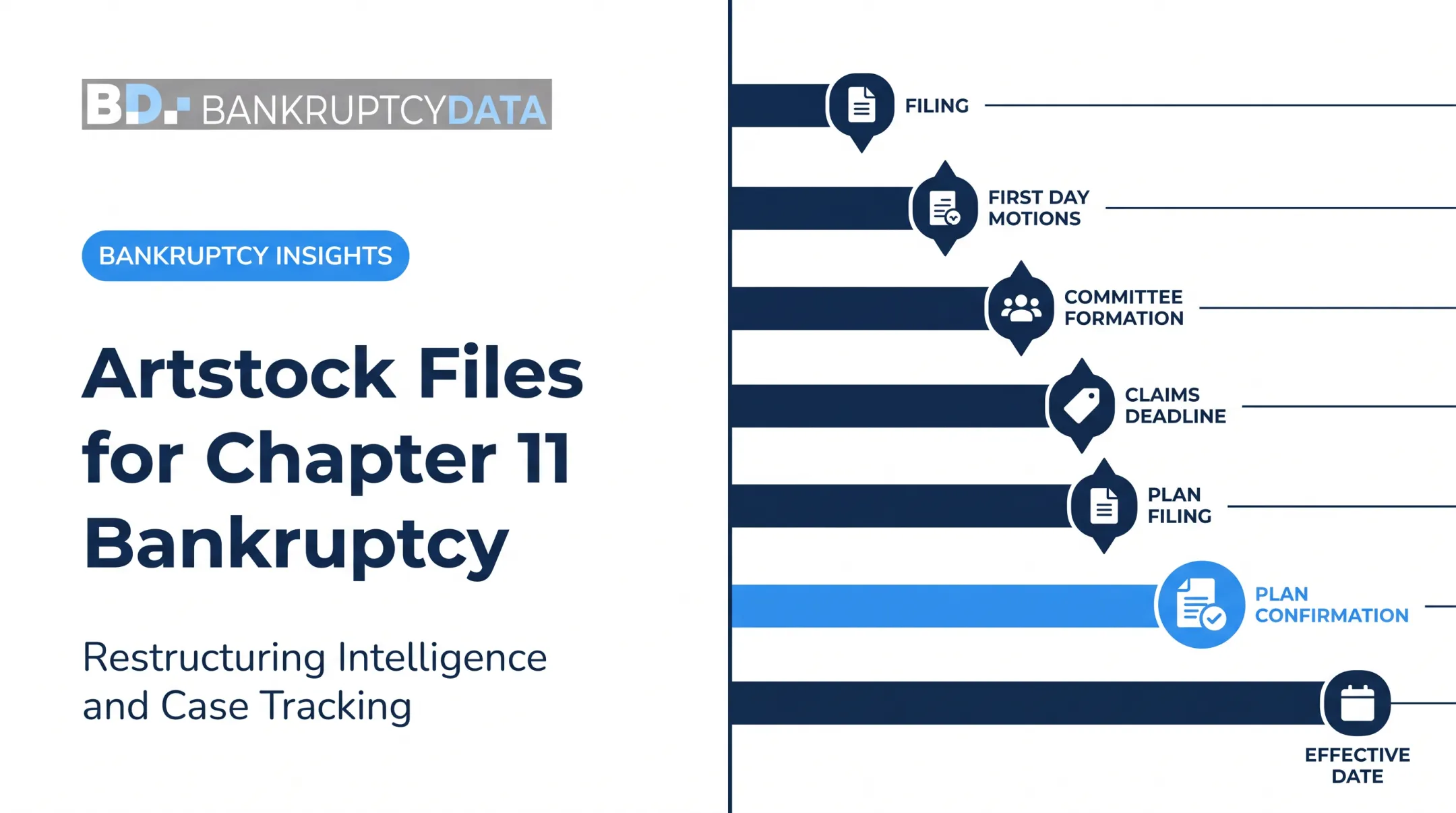
Court milestones from the docket:
| Milestone | Date |
|---|---|
| Chapter 11 filed (D. Del., Case No. 25-12197) | December 14, 2025 |
| Modified plan filed | January 20, 2026 |
| Plan confirmed | January 22, 2026 |
| Plan effective | January 23, 2026 |
| Final decree closing cases | February 25, 2026 |
The December release projected completion by February 2026. The plan went effective sooner than that forecast.

What Happened in iRobot's Bankruptcy Filing?
A prepackaged case
"Prepackaged" and "pre-negotiated" are practice labels, not separate chapters of the Bankruptcy Code. In a prepackaged case, plan votes are solicited before filing. In a pre-negotiated case, terms are agreed beforehand but voting happens after filing. iRobot called its case prepackaged and filed vote-tabulation materials with its initial plan.
Picea's role
Before the petition, Picea was iRobot's primary contract manufacturer and secured lender. In November 2025, iRobot reported owing Picea $161.5 million for manufacturing, $90.9 million of it past due. Under the plan, Picea's Hong Kong subsidiary held the first-lien term-loan claims, and Picea ended up owning 100% of the reorganized company.
Equity, cash, and vendors
- All pre-effective-date common stock was cancelled, and 10,000 new shares were issued at effectiveness.
- iRobot had roughly $15 million in cash at filing and sought to use cash collateral rather than obtain DIP financing.
- A trade-claims motion estimated about $35 million in undisputed prepetition trade claims, with about $24 million due within 30 days.
Who does what
The bankruptcy estate is the debtor's property interests at filing. The iRobot entities remained debtors-in-possession and kept running the business in the ordinary course. The court supervised the case and confirmed the plan. Picea was the plan owner, secured creditor, and manufacturer, not a trustee.
At filing, iRobot said it expected business as usual for products, the app, and customer support. That is a company statement, not a guarantee that nothing will change.
Why Did iRobot File for Bankruptcy?
Falling revenue and heavy debt
The filings tell a clear story:
- FY2024 revenue was $681.8 million.
- Revenue for the first nine months of 2025 was $374.959 million, down 26.5% year over year, with a nine-month net loss of $131.607 million.
- At September 27, 2025, cash was $24.8 million against a term loan with a fair value of $205.3 million.
- iRobot disclosed substantial doubt about its ability to continue as a going concern.
The lost Amazon deal
Amazon's offer promised capital and strategic backing. Regulatory scrutiny in the U.S. and Europe ended that path. iRobot absorbed a major layoff and a leadership change right after.
Tariffs and production
In its Q3 2025 filing, iRobot estimated about $18 million in additional 2025 tariff costs, using assumed rates of 20% for Vietnam and 55% for China on U.S.-bound imports. Those are company estimates, not final amounts paid. U.S.-bound production had moved mainly outside China, especially to Vietnam, with Picea as the primary contract manufacturer.
Cuts and competition
iRobot also cut staff again in November 2024, with estimated restructuring charges of about $5.3 million. R&D fell from 15.1% to 11.1% of revenue over the first nine months of 2025 versus 2024. Filings document the cost, tariff, and financing pressure. Cheaper rivals form the competitive backdrop, though no reliable market-share figure supports a precise claim.

What Does the Bankruptcy Mean for Customers, Investors and Other Stakeholders?
Roomba owners
- Existing robots don't stop working because of a filing.
- iRobot's support page says the one-year manufacturer warranty remains valid from purchase.
- Check the app, support channels, and any subscriptions for new terms. Future policies are unsettled.
Privacy
iRobot's privacy policy (updated November 6, 2024) describes robot and app usage data, user-assigned room and zone names tied to maps, and customer records such as contact and payment details. Ownership change alone doesn't prove a change in data practices, so read the live policy. At emergence, iRobot said it created a U.S.-based subsidiary, iRobot Safe, to protect U.S. consumer data.
Shareholders
The plan cancelled old equity, and Nasdaq filed a Form 25-NSE on January 15, 2026 for removal from listing. Check the SEC filing index and consult a qualified adviser for your situation.
Creditors, suppliers, and employees
Trade-claims treatment matters for vendors:
- The interim order authorized qualifying payments but did not direct them
- Picea consultation was required above $500,000
- No claims bar date or named critical-vendor order was readily apparent in public materials, so check the full docket
Stretto hosts the public docket and claims portal.
Tracking cases like this
Professionals can monitor:
- Docket activity and first-day motions
- Financing and cash-collateral terms
- Asset sales and ownership changes
- Claims, objections, and confirmation milestones
BankruptcyData is one research resource for this work. Its platform covers 600k+ records spanning 45+ years of U.S. bankruptcy activity, with docket monitoring and alerts. It supports research and doesn't replace legal, financial, or investment advice.
Is iRobot a Chinese Company Now?
Ownership changed. iRobot reported after emergence that it is privately held and wholly owned by Picea. But its FY2024 10-K identifies it as incorporated in Delaware, with headquarters at 8 Crosby Drive, Bedford, Massachusetts.
Ownership, incorporation, manufacturing, and brand identity are separate things. Picea's exact headquarters and ultimate owners are not readily available in public filings.

Open questions remain:
- No public CFIUS filing or clearance statement is readily available. That remains unresolved, not evidence either way.
- iRobot announced governance controls separating non-U.S. ownership from U.S. government-related business.
- Long-term data governance and IP handling will play out over time.
Frequently Asked Questions
Is iRobot a Chinese company now?
Picea owns 100% of iRobot, but the company remains incorporated in Delaware and headquartered in Massachusetts. Ownership and corporate history are different questions.
What does iRobot's Chapter 11 bankruptcy mean for Roomba owners?
iRobot said its products, app, and support were expected to continue. Check iRobot's current pages for warranty, repair, subscription, and privacy updates.
Will Roomba vacuums stop working because iRobot filed for bankruptcy?
No. Filing doesn't disable existing devices. Watch for changes to software, cloud services, support, or parts availability.
Why did Amazon's acquisition of iRobot fail?
Regulators raised competition concerns, including the European Commission's foreclosure theory and the FTC's separate concerns. The parties terminated the deal on January 28, 2024.
What happens to iRobot shareholders in Chapter 11?
The confirmed plan canceled all old equity and issued new shares to Picea. Consult a professional about your circumstances.
Does iRobot's bankruptcy mean the company is shutting down?
No. Chapter 11 lets a debtor adjust debts and stay in business, unlike Chapter 7 liquidation. iRobot kept operating and emerged on January 23, 2026.