Hronis, Inc. and nine affiliated entities filed Chapter 11 in the U.S. Bankruptcy Court for the Eastern District of California on March 6, 2026. The family has farmed California's San Joaquin Valley since 1945 and reported growing more than 80 million pounds of table grapes a year.
The case has moved quickly. It involves a dominant secured lender, DIP financing, a credit bid, a creditors' committee challenge and agricultural trust claims. It ended in a confirmed liquidating plan, not a going-concern reorganization.
This article covers the filing background, the major court developments, creditor issues and what remains open. Many causes and amounts below come from debtor-prepared filings, not court findings.
Key Takeaways
- Ten affiliated debtors filed on March 6, 2026 (lead case 26-10978, Judge René Lastreto II).
- Weather losses, low prices, unpaid trade debt and lender defaults preceded the filing.
- Conterra was the secured lender, DIP lender and stalking-horse bidder, and was designated successful bidder.
- A liquidating plan was confirmed September 23 and took effect September 25.
Hronis Chapter 11 Case Snapshot
Company Profile
Hronis is based in Delano, California. It grows, packs, and ships table grapes and citrus; the family began growing citrus in the late 1980s. The debtor disclosure describes about 3,700 acres of owned farmland and a cold-storage complex of more than 164,000 refrigerated square feet.
Case Facts
| Item | Detail |
|---|---|
| Court | U.S. Bankruptcy Court, Eastern District of California |
| Judge | René Lastreto II |
| Lead case | Hronis, Inc., No. 26-10978 |
| Petition date | March 6, 2026 |
| Claims agent | Donlin Recano & Company, LLC |
| Debtors | Hronis, Inc.; Hronis Capital Assets, LP; Hronis Capital Management, LLC; Hronis Citrus, LLC; Hronis Farming, LP; Hronis Fruit Company LLC; Hronis Land Company; Hronis Ranch, LLC; Hronis Resource Management, LLC; The Hronis Family Limited Partnership |
Petition-Date Figures Versus Later Data
Hronis, Inc.'s April 3 schedules list $19.9 million in assets, $212.3 million in liabilities, and $87.2 million in secured claims. Those figures cover Hronis, Inc. alone, not all ten debtors, and the assets are book values that may differ from realizable value.
By July 10, the debtor reported about $176 million in total secured claims held by Conterra, a later figure on a different basis.
Professionals tracking this case can follow filings, stakeholders and outcomes through BankruptcyData, which organizes docket activity for Chapter 11 cases like this one.
Why Hronis Filed Chapter 11
Debtor-Stated Pressures
The July disclosure points to several causes:
- 2023 Hurricane Hilary damage, reduced yields and higher labor cost per unit
- A 2024 season with better weather but excess supply and low prices
- More than $30 million owed to trade vendors and contract growers that remained unpaid into early 2025
- California Franchise Tax Board claims of about $1.442 million, plus a roughly $248,000 levy debited March 6
The $30 million figure describes early 2025, not a petition-date total. The debtor separately reports about $30 million in unsecured claims at filing.
Revenue and Receivables
Hronis, Inc.'s statement of financial affairs reports gross business revenue of $31.4 million in 2024 and $123.4 million in 2025. Receivables on the schedules include $11.9 million over 90 days old, of which $6.1 million is listed as doubtful. These are unaudited book figures.

The Liquidity Squeeze
Farming spends first and collects later. Labor, cultivation, harvest, packing and shipping all need funding before receivables arrive. When growers and vendors go unpaid and credit tightens, the next season gets harder to finance.
Conterra and the Lender Chronology
Five debtors borrowed $70 million from AgAmerica in December 2023. Conterra acquired that land loan in February 2026, with about $71.95 million due at filing. Conterra's separate operating loan dated October 29, 2024 had a maximum line raised to $85.85 million by mid-2025. That figure is a limit, not an amount drawn.
According to the debtor, defaults arose by April 2025, forbearance talks followed, and consensual discussions in December 2025 and January 2026 preceded a filing meant to avoid receivership and foreclosure.
A merchant cash advance dispute with DLP Funding is also in the record. DLP says it purchased 19.25% of future receipts, and the debtor-side challenge asks whether that was really a loan. No final characterization has been established.
A Chapter 11 filing is not proof of fraud or misconduct, and pleadings are allegations until a court rules.
How the Chapter 11 Case Developed
DIP Financing
Conterra provided the DIP loan. The court entered interim approval March 12 and final approval April 24. About $30 million had been funded by July 10. The debtor says the milestones required an auction sale of substantially all assets with Conterra as stalking horse.
Confirm the final commitment cap, interest rate and fees against the operative order. A U.S. Trustee objection is not readily documented in available materials, so none should be assumed either way.
The Section 363 Sale
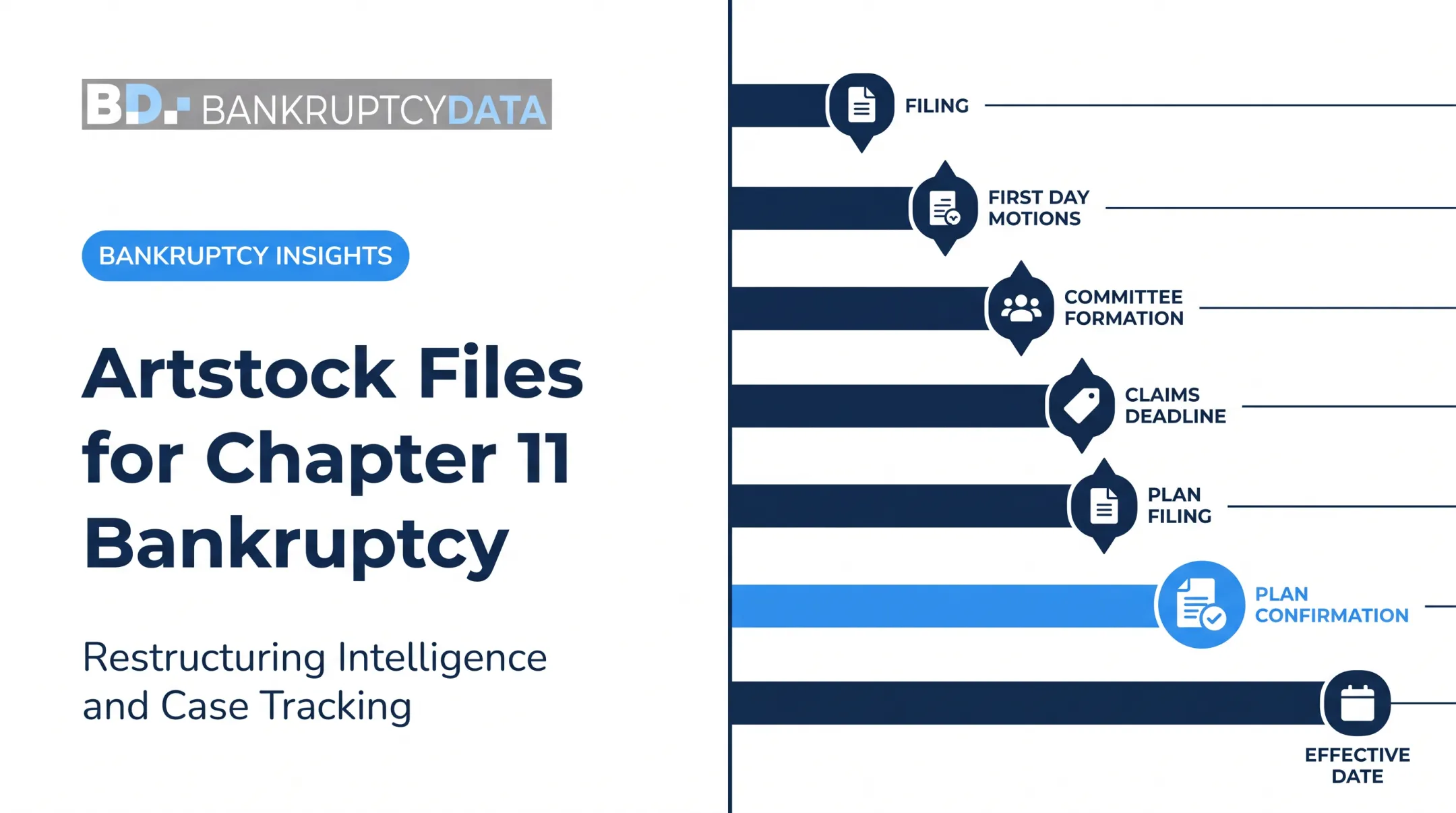
- March 20: debtors moved for bidding procedures
- April 24: bidding-procedures order entered
- May 5: sale motion filed
- June 24: auction held, with Conterra designated successful bidder for most assets
- June 30: court approved sales to successful bidders
The final credit-bid amount and closing date are not readily available from public materials; confirm both against the operative sale order.
Credit Bidding in Plain English
Under Section 363(k), a secured creditor can generally use its allowed debt as payment when buying its own collateral. A court can limit that right for cause. It does not prove the lien or claim amount is valid.
The Committee Challenge
The Official Committee of Unsecured Creditors challenged Conterra's liens and credit-bid rights and objected to the sale, arguing it operated as a de facto foreclosure. Its adversary proceeding (No. 26-01028) raised equitable subordination, lien and credit-bid declarations, and avoidance theories.
A June 2026 settlement gave unsecured creditors an initial $500,000 cash carve-out, potentially up to $3 million, plus other specified assets and causes of action. The committee withdrew its challenge and objection. Those are settlement terms, not findings.

Post-Sale Status
The court confirmed the First Amended Combined Chapter 11 Plan of Liquidation and Disclosure Statement on September 23, 2026, effective September 25. Remaining assets go to a liquidating trust, which can pursue claim objections after the effective date.
What the Case Means for Creditors and Stakeholders
Secured lenders, trade vendors, growers, logistics providers, employees and customers are affected differently. No recovery is assured, and rankings depend on docket orders.
PACA and Producer's Liens
The Perishable Agricultural Commodities Act, 7 U.S.C. § 499e(c), may give unpaid produce sellers trust protection in produce, derived products and proceeds. Eligibility depends on timely notice and compliant payment terms; terms beyond 30 days need a prior written agreement.
California Food and Agricultural Code §§ 55631-55653 offers growers a separate lien for farm products sold to processors. Each claim still needs documentation and review. No Hronis-specific determination is readily available, so confirm eligibility against the docket and your own records.
Claims Process
- PACA claims bar date: May 14, 2026
- General claims bar date: July 14
- Governmental claims bar date: September 2
- Administrative, rejection-damages and professional-fee deadlines: October 20, 2026
Claimants can reach Donlin Recano at 1-855-552-1575 or hronisinfo@angeiongroup.com.
Lender-Led Sale Versus a Traditional Plan
A Section 363 sale moves assets, and can sell them free and clear of interests, without deciding final distributions. Unsecured recoveries here depend on the carve-out, avoidance claims and remaining estate assets. Contracts and leases are assumed or rejected along the way, and rejection claims have their own deadline.

Who Does What
- Debtor counsel: Saul Ewing LLP
- U.S. Trustee: oversees administration and the committee process
- Claims agent: Donlin Recano & Company, LLC
- Creditors' committee: represents unsecured creditors
The CRO, investment banker and committee professionals are not readily confirmed from public filings; check the docket for current appointments.
What Happens Next in the Hronis Case?
Checklist
- Claim objections and PACA or producer-lien determinations by the liquidating trustee
- Lease-rejection claims and professional-fee applications
- Distributions and reserves, since no claim is paid before allowance
- Sale-closing matters and tax issues
- DLP adversary: status conference October 28, 2026, 11 a.m. PT
The September 23 confirmation was of a liquidating plan. For creditors, that means orderly liquidation through a trust, not a continuing reorganized business.
What to Watch in Notices
Watch notices for:
- Bar dates and settlement deadlines
- Distribution notices and claim objections
- Hearings and orders affecting contracts or collateral
BankruptcyData helps legal, investment, advisory, credit and data teams follow court filings, stakeholders, case timelines and restructuring outcomes. It is a research platform, not a source of legal advice.
Court orders, docket filings and claims-agent notices outrank early media reports. Case details current through September 29 may not reflect later filings. Sale-closing details, the DIP cap and individual claim outcomes remain subject to change.
Frequently Asked Questions
What is Hronis?
Hronis is a California table grape and citrus grower, packer and shipper based in Delano. Ten affiliated entities form the bankruptcy debtor group.
Which is better, Chapter 7 or Chapter 11?
Chapter 7 usually means liquidation by a trustee. Chapter 11 lets an eligible business restructure, sell assets or liquidate under court supervision. The right choice depends on the facts and professional advice.
Which is better, Chapter 11 or Chapter 13?
Chapter 13 suits individuals with regular income whose debts fall under U.S. Courts limits. Businesses commonly use Chapter 11. Neither is universally better.
Why did Hronis file Chapter 11?
The debtor cites weather-related losses, low produce prices, growing unpaid trade debt and tight financing. It says filing avoided receivership and foreclosure, and allowed a court-supervised sale.
Who is handling the Hronis bankruptcy case?
Judge René Lastreto II presides in the Eastern District of California. Saul Ewing LLP represents the debtors, Donlin Recano is the claims agent, and Conterra is the secured lender. Roles may change.