

Bankruptcy Professional Spotlight
Brad Sandler
by Zach Russell | Oct 30, 2026, 6:14:58 PM
Bradford "Brad" Sandler
Pachulski Stang Ziehl & Jones LLP
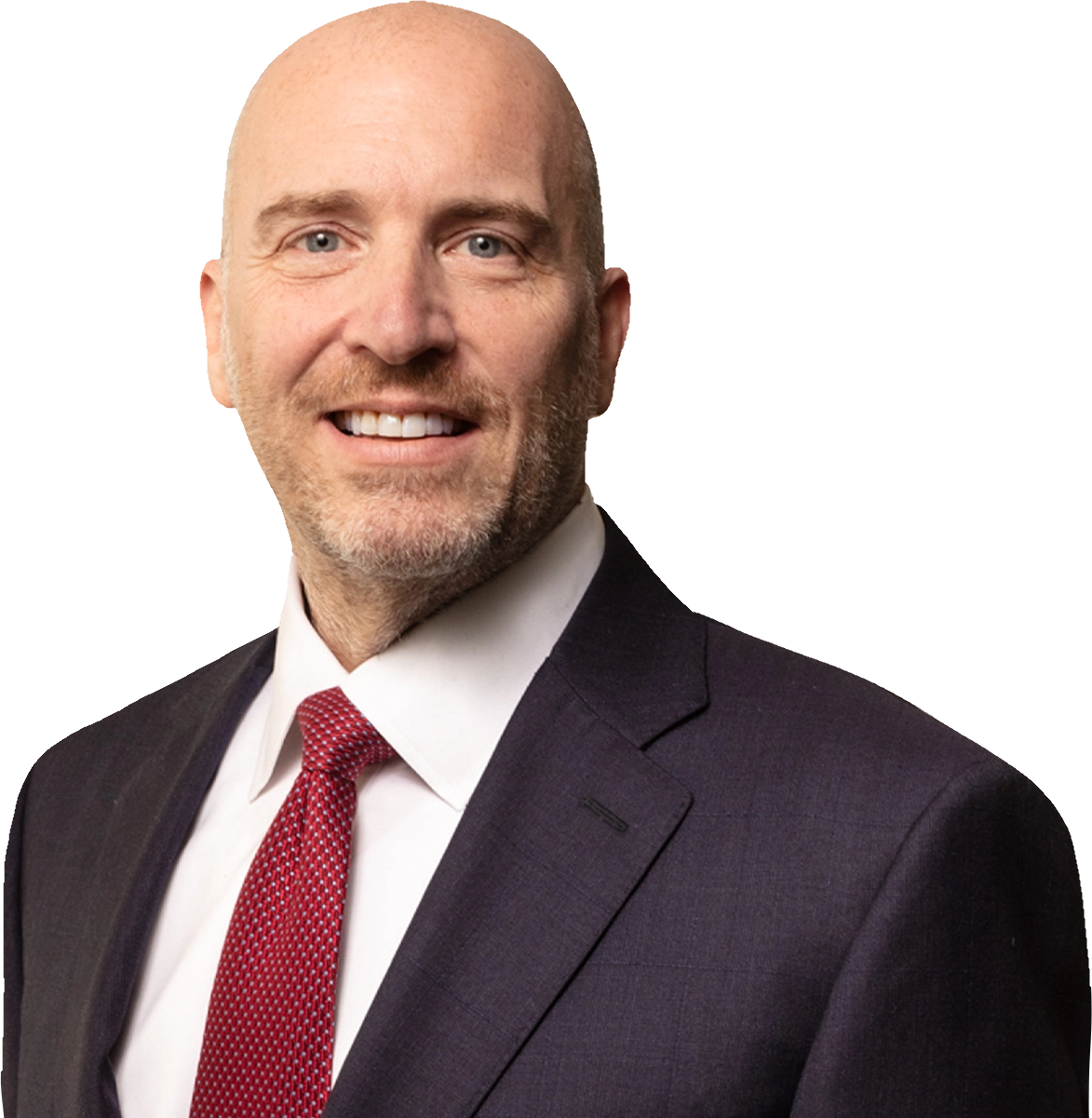
Bradford J. “Brad” Sandler became the first Chair of Pachulski Stang Ziehl & Jones LLP on October 1, 2026. He is also managing partner of the firm's New York Office and serves as co-chair of the firm’s Committee Practice Group. With more than 25 years of experience, he has advised creditors’ committees, companies, equity holders, buyers, and fiduciaries in both in- and out-of-court restructurings. Brad’s notable representations include the creditors’ committees in J. Crew, Red Lobster, Cineworld, QVC, Eddie Bauer, and Party City.
Brad is a leading figure in bankruptcy law, a Fellow of the American College of Bankruptcy and a life member of the American Bankruptcy Institute. He has also served on court appointed committees addressing complex Chapter 11 cases and local bankruptcy rules. He is a frequent speaker and author on bankruptcy and restructuring issues and has taught as an adjunct professor of law at Temple University School of Law.
We had the opportunity to speak with Mr. Sandler about how his background shaped his legal practice, how committees build leverage and consensus, and what the J. Crew and Red Lobster cases taught us about preserving value. We also discussed the growing role of out-of-court solutions, the importance of fixing a company’s operational issues along with the balance sheet, his priorities as PSZJ’s new Chair, and the pressures he sees ahead for consumer-facing businesses.
Editor’s Note: This interview has been edited and condensed.
Finding Restructuring
BankruptcyData: What brought you down this path? Was it something you always envisioned yourself doing or was it happenstance?
SANDLER: I more or less fell into it. Which I think is how a lot of people end up in restructuring. In terms of formal education, I did a combined undergrad-MBA program. I dual majored in finance and economics, and I took a course in business law, which I fell in love with. I actually thought I was going to be a securities analyst on Wall Street before I decided to go to law school.
The advice my business law professor gave me was to go work for a few years in corporate America, because in his view, it would make you a better business lawyer. And I think he was right. I worked for a few years at a large multinational firm called Unisys Corporation. When I started working there, the stock price plummeted, and they started to do an internal reorganization. So that was my first touch with restructuring work. We were working around the clock and the company avoided bankruptcy.
After three years, I went to law school. I had no interest in taking bankruptcy because I wasn’t really interested in it. I graduated, worked for a large firm in Philadelphia doing litigation, and after about three years, I ended up going to a bankruptcy boutique in Philadelphia. It was the leading bankruptcy firm called Adelman Levine Gold and Levin. When I got there, I started learning bankruptcy and I fell in love with it. It was phenomenal to me.
You’ve got to be creative. In the morning, you could be in court. In the afternoon, you could be working on a transaction. It was really a lot of fun. For me, it was natural because of my business background. I understood capital structures, cash flows, valuation, etc. I really felt like I was helping. As I have always explained to my kids, what do bankruptcy lawyers really do? At the end of the day, it’s all about preserving jobs, fixing the business operationally and financially, and figuring out how to return value to creditors. It is really about maximizing value in some type of creative way because every case is different: different players, different facts, different industries. And at Adelman Lavine Gold and Levin, I was working with a great group of people to boot.
BankruptcyData: Does your business background bleed into your approach as a lawyer? How does it play in?
SANDLER: A lot of lawyers, when they get involved in a case may ask, “What can we object to?” Or they come in with a standard playbook. On the company side, the first thing I really want to do is understand where the value is. I want to know who’s getting paid, who needs to be paid. I want to understand the cash flows. I want to understand the business side of the debtor.
If I’m on the committee side, it’s a different type of issue. There is often value allocation and sometimes that’s dressed up in litigation. If you can read the 13-week cash flow and the lender’s waterfall as fluently as a credit agreement, then you can figure out what is worth fighting for, what fights are actually worth having, and which ones will simply burn the company’s resources.
In J. Crew, we pressed a lien challenge, and we found some real value for the unsecured creditors. We were able to understand what leverage we had. We increased the recoveries, essentially doubling the recoveries of what the company initially proposed, and we really kept the store footprint largely intact. What I bring to the table is that because of my background, I understand the operations and financial side together. Also, having worked inside a large corporation gave me a perspective that a lot of lawyers never see. It’s very different than working in a law firm.
Committee Strategy and Consensus
BankruptcyData: What are some of your first priorities when you get retained by a committee? What are some of the first things you think about?
SANDLER: It definitely is case dependent. But the common thread is you’re drinking from a fire hose. Everybody’s been involved already – the debtors, lenders, major creditor groups, and the like – everyone except the creditors’ committee. Now, all of a sudden, the committee is on board. It might be a week or 10 days before the final DIP hearing, and you have to get up to speed very quickly so you can participate in the process.
You want to understand the cash flows, understand the DIP budget, the assumptions behind the DIP budget and the milestones. The milestones are often designed to give the lenders control of the case and often the outcome. You want to understand how much time you really have and how much time you really need. You want to understand what unencumbered assets may exist, at least buckets of unencumbered assets, and if possible, there approximate value. You won’t have time to do the lien investigation; that comes later. You need to know this because you want to preserve the unencumbered assets.
The third thing you want to figure out pretty quickly is what your constituency really wants. Generally speaking, trade creditors are going to want a customer and a preference waiver. Landlords are going to want certainty and a stable tenant. Bondholders may want a cash recovery, equity, or some type of combination.
As committee counsel, you have to really talk to each of your members and figure out what they actually want in the case. We build on our relationships, not just with our clients and committee members, but also with the debtors’ professionals and lenders’ professionals. Knowing who they are on the other side, and them knowing us, gives us credibility. They also know we are creative and constructive to the process, so there’s a greater likelihood they invite us into the room as opposed to firms that come in and throw bombs first. Bankruptcy professionals are creative and should be able to develop a solution without litigation; if the process fails, litigation is required to preserve value, but it comes at a cost and that cost often comes out of the pocket of the creditors, so we try first to develop a solution that is commercially reasonable.
BankruptcyData: You made a point about milestones when it comes to DIP financing. How do you approach that and how often are they strictly enforced by the court?
SANDLER: The DIP milestones will be enforceable. That’s one of the reasons why it’s so important for the committee to focus on them. The debtor needs to comply with the milestones or it will be a default on their financing, which they and the committee won’t want to see happen. Debtors want milestones they can live up to. If they agreed to milestones they won’t be able to live up to, they’re setting themselves up for failure.
A lot of times, committees will come in and just say, “We want more time.” More is not always better. You have to be thoughtful about the milestones. Let’s say, hypothetically, the debtor has shopped their assets around thoroughly for three or four months before the bankruptcy, and there is no interest, so the stalking horse in bankruptcy is a credit bid by a secured creditor who really wants to own the assets. Does more time in the bankruptcy actually make sense? It may not. You may be burning administrative expenses. The cost of Chapter 11 is expensive, and it’s getting more and more expensive.
If you extend the sale process and there’s really no chance of anything changing from that additional time, you’re just harming the estate and the creditors, including the unsecured creditors. Why not take the savings? We have even advocated for a shorter time period. Let’s go right to the sale, and whatever the savings might be, let’s give that to the unsecured creditors. One size is not appropriate for every case.
BankruptcyData: Coming back to committee priorities, the committee can be wide ranging. How do you align priorities and get everybody to agree on a plan of action?
SANDLER: Trade creditors and landlords will want a future relationship whereas litigation claimants and financials generally want cash, and financials might want some equity too. Their approach to the case is very different. The average committee will have a mixture of both. I will find out from each of them separately what they’re looking for out of the case. Once I know what their goal is, I can try to come up with some type of creative solution that gets each constituency what it wants.
In Cineworld, we actually did an intra-committee settlement. We negotiated with the lenders and the debtors for a recovery to the unsecureds. We had the indenture trustee and a litigant at Topco, and then we had the other creditors at the Opcos, the landlords and vendors. The Topco creditors were structurally subordinated to the Opco creditors. To create fairness, we did an intra-committee settlement and counted, for example, preference waivers as consideration. We got that approved under the plan. Every member was happy.
BankruptcyData: And how do you come up with a solution like that?
SANDLER: It’s having a lot of experience at this point. I like to think that I’ve been creative all along, but at this point I can look at a case and figure out where it should end up. Especially from the committee perspective. I’m always thinking about creative approaches and new approaches. There’s nothing that I like more than having a happy client. When I can come up with a solution that makes 7, or in Cineworld, 10 members happy, it gives me incredible joy.
Committees are coalitions. The committee is the client, but you have a coalition of people. It’s not like having a single client with a single view. It involves a lot of communication. The different parties have a different idea of the time horizon that is acceptable and a different idea of what a win will be. Understanding what they all want and when they want it, and analyzing the case quickly and thoroughly, is important so we and they can make an educated decision.
Building that consensus comes with developing trust and giving them information they can use. A lot of committee members are reporting internally, and they have their own outside advisors. It’s a matter of communicating with them regularly and giving them timely information they know is trustworthy. All that comes from a regular cadence of communication, no surprises, decisions by voting, and committee counsel telling them what they need to hear rather than what they want to hear.
Lessons from J. Crew
BankruptcyData: When you first became involved in J. Crew, did you anticipate the impact it would have later down the line?
SANDLER: The famous trapdoor and blockers that followed came from a much earlier transaction, years before the Chapter 11. I don’t think anybody in 2016 anticipated that a dropdown of the IP would become shorthand for an entire era of liability management.
The market learns there are holes in these credit agreements, and you’ve got super smart finance lawyers who are finding holes in credit documents and developing creative liquidity solutions in various different liability management transactions. And then you have to fill those holes, be it through litigation or through other finance lawyers. The market learns all of these lessons after the fact, and then it adjusts. Something happens, a hole is seen, sometimes magnified, and then the market adjusts to fill or prevent the holes. Then the finance lawyers come up with a new hole and the cycle starts again.
What I saw in 2020 set the tone for pandemic retail. J. Crew was one of the first out of the gate. We were working around the clock. I think it answered the question: Can a mall-based apparel retailer actually reorganize with stores closed? The answer was yes, because it was able to right size the balance sheet. It was fortunate it had Madewell, which was doing well. But look at what happened after J. Crew. It was Neiman Marcus, Penney’s, just a cascade of retailers that all kind of used the J. Crew model of an RSA that was lender backstopped; the retailers were essentially in and out of bankruptcy in four months. That really became the playbook for the rest of 2020 for retailers. Very few retail bankruptcies go beyond four or five months. They really can’t because there’s only a certain time period a debtor can evaluate which leases to keep and which ones to reject thanks to the 2005 amendments. Because chapter 11 is incredibly expensive, debtors should take full advantage of the tools that the Bankruptcy Code gives to them. One of the tools is to reject leases.
When debtors don’t fix the operational side and only look at its financial side for a pure financial restructuring, I think the likelihood of a Chapter 22 increases. If they actually analyze their retail footprint, they can take advantage of the tools in chapter 11 and right size their real estate portfolio, which is much harder and more expensive to do outside of chapter 11. Retailers have their good stores with a strong positive four-wall EBITDA and their bad stores with really negative four-wall EBITDA. Those are easy: assume the good; reject the bad. It’s the bubble stores where the store is maybe slightly negative or positive, requiring the debtor to have discussions with its landlord. If the landlord is willing to give some concessions, a negative store can become a positive store leading to an assumption of the lease, and that’s good for the landlord and the employees at that location.
Regardless of whether I’m representing the debtor or the committee, it’s important to right-size the real estate footprint and make sure the retailer doesn’t come out with too much debt. Retailers generally can’t sustain a lot of the debt because margins are thin. If the debtor and lenders, working with the committee, right size the capital structure and the real estate portfolio, optimize operations, and put into place capable management, I think they have developed a good chance for the reorganized retailer’s future success.
We have seen virtually all the issues in retail bankruptcies. I don’t think there’s any firm in the country that has done more debtor and committee retail cases.
Red Lobster and More Real Estate
BankruptcyData: In Red Lobster, much of the focus seemed to be on the endless shrimp deal. Was there anything the headlines missed?
SANDLER: The reality is that the endless shrimp did cause substantial harm to the business. But in every real estate heavy case, whether you’re talking about movie theaters, bowling alleys, restaurants, or retail, real estate is part of the story.
Golden Gate bought the company from Darden and financed the deal with a $1.5 billion sale-leaseback of the restaurants. Whenever I see a leaseback, it’s always a red flag. It converted owned real estate into roughly $190 million in annual rent, and that created a big burden on the operations. One of the stories they didn’t really talk about was right sizing the capital structure as well as optimizing the operations. Both of those things had to happen in Red Lobster.
The second thing was the controlling shareholder. The focus was on endless shrimp, but not that Thai Union was the exclusive supplier of the shrimp. That’s a conflict, and the committee started to investigate that. The question wasn’t really whether the promotion itself was a bad idea. The issue was the pricing, the volume, and the sourcing of it. The question was whether that was good for Red Lobster or was it good for the owners. We preserved those claims. They weren’t released under the confirmed plan; they’re in a trust, and the trustee is dealing with them now.
I think the other thing that the headlines didn’t focus on was the operations. Traffic was down, labor and seafood costs were up. And because of what was going on in the economy, the customer was getting squeezed, and the company was getting squeezed by its owner.
The last thing, and the most important thing, goes back to what I said before: Our job as restructuring lawyers is to save jobs. The case was very successful because 36,000 people kept their jobs. The landlords got a stabilized tenant. The vendors got a stabilized customer. The reorganization was wildly successful. That was the real story and that story wasn’t really picked up.
BankruptcyData: Are sale-leasebacks a common thread in retail bankruptcies you work on?
SANDLER: You don’t see it in every one. It’s not just retailers; it’s really any real estate heavy business. The problem is that it may give them liquidity in the short term, but they’re now putting a burden on the company. They’re not fixing their operations. If they end up using that liquidity to fix their operations, that’s one thing. But a lot of times they don’t and it’s those companies that often end up in Chapter 11.
Advising Companies
BankruptcyData: When you first get an engagement on the company side, what tells you an out-of-court workout may be the best option?
SANDLER: The first thing I do is ask: What does the company actually need? We know Chapter 11 is expensive, it’s public, it’s usually slower than a workout. So, I look at Chapter 11 as a tool of last resort. Sometimes you need Chapter 11 because there are certain tools that you can’t use outside. A retailer or restaurant has dozens or hundreds of leases and needs to right size the real estate portfolio, that leans towards a Chapter 11. Selling assets free and clear is something else that leans towards Chapter 11. Or you might need Chapter 11 to cram down a dissenting class of creditors.
If you have a concentrated and sophisticated commercial creditor group that can be brought to the table, a business that is fundamentally sound, and a balance sheet that consent can fix, that’s a prime candidate for an out-of-court solution. Smart restructuring lawyers often will go down a parallel path. On one hand, you’re having negotiations, but you’re still preparing for a chapter filing in the event the negotiations go sideways.
You’re seeing a lot more out-of-courts because Chapter 11 has gotten so expensive. Out-of-court solutions are getting more and more sophisticated. As a firm, probably 50% of our restructuring work is out of court. I think that trend will continue.
BankruptcyData: And how does your creditor committee work influence the company side work?
SANDLER: One of the benefits I can provide is I know where the committee is going to be looking. I know the hot button issues. I can talk to the committee with credibility because I do that type of work. I know when it’s appropriate to appoint an independent director or multiple independent directors.
The strategy I try to use, if possible, is to set up the restructuring for success by trying to get the committee to work with us so that the committee helps us forge a path to confirmation rather than being an obstacle. If they’re an obstacle, the level of uncertainty goes up and it’s more expensive and takes longer. None of which is good for the company because generally speaking, companies don’t age well in bankruptcy.
I can usually get the committee to work with the company, but if not, then we litigate. It gives us, and not just me but our firm in general, a very good perspective. Whether you’re talking about Rich Pachulski, Laura Jones, Deb Grassgreen, or Jeff Pomerantz, we all do both debtor and committee work. It gives us a great perspective. As a full service restructuring law firm, it really creates a lot of value for our clients.
Leading the Firm
BankruptcyData: You’ve recently become Chair of the firm. What is your vision in that role?
SANDLER: I want to build on the amazing platform that the founders have built over the years. I am not looking to change the culture of the firm. I’m looking to make sure that we have cutting-edge technology. I call it “AI plus human.” I don’t believe AI is going to replace our judgement. AI is an incredibly valuable tool. We’re already seeing a lot of efficiency, but it still requires human judgement. We’ve implemented a very thoughtful, strategic way with a lot of safeguards.
I want to see us continue to invest in top restructuring talent across the board, whether it’s debtor work, committee work, litigation, corporate distressed M&A. We’re a full service restructuring law firm and I want to see the firm grow strategically, not to grow for the sake of growing. I want to build on our amazing platform.
And the founders aren’t going anywhere. They’re going to continue to actively practice, and I’ll continue to actively practice. The example that they’ve set for all of us is that the leaders at Pachulski roll up their sleeves and they practice. I’m excited, thrilled, honored, and humbled that my partners selected me.
On the Market
BankruptcyData: Where do you see the biggest pressures over the next year or two?
SANDLER: When the bankruptcy economy is really active, it’s easy. When it’s inactive, it’s somewhat easy. When you’re in that in-between stage, it becomes harder to predict, and I think we’re in that in-between stage right now. My crystal ball is as clear or as foggy as anybody else’s.
If I look at some of the tea leaves, I look at the consumer, and the consumer is being squeezed. We have sticky inflation, and I think it’s going to continue to increase. You also have consumer debt going up. Interest rates, I believe, will go up again. Whether it’s in December or early next year, I don’t know. I think the consumer is going to continue to get squeezed, and at a certain point, they’re going to pull back.
When I focus on the consumer, I look at consumer-facing industries: casual dining, specialty retail, consumer products. Lower- and middle-income customers are going to be stretched the most, so I look at businesses that serve them. Because of interest rates, I look at fixed cost businesses with leases and labor that can’t flex easily. I think consumer-facing business will be at risk over the next 12 to 18 months.
I also think that private credit is probably going to try to keep companies out of Chapter 11. Take a look at the amend and extends, who’s PIK’ing their interest. Coverage ratios tell a meaningful story. You want to look at the companies where they have slow burn balance sheets, and when they break, they tend to break all of a sudden. Look at companies that are doing sale-leasebacks, supply chain financing, or some type of receivables program.
The third area of concern would be the LMEs from the last few years. To the extent the company isn’t solving its operational issues, they’re just kicking the can down the road. If I had to make a prediction about what’s going to be busy in 12 to 24 months, I think consumer-facing businesses and businesses susceptible to interest rate changes, for example, capital intensive industries, are the ones to focus on.
Outside the Practice
BankruptcyData: What do you like to do when you’re not practicing law?
SANDLER: I remember, I guess it was 27 years ago, my wife and I were out with her best friend and her husband, and her question was, “What are your hobbies?” I said, somewhat sheepishly, “Hobbies? Um, the law is my hobby. I live it 24/7.” So fast forward all these years, and my answer really hasn’t changed all that much. I really love what I do, I’m blessed. My dad always told me, “Find something that you love, and you’ll never feel like you’re working.” I don’t look at what I do as work. I love it so much. I’m really lucky.
When I’m not focused on the law, I’m spending time with my family. I like hiking and going to museums. I’m hoping to take up golf. My wife and I recently moved into a golf community. I’m in a golf group, but I have to learn how to swing the golf club. I don’t understand why it’s so hard to hit a ball that doesn’t move.
LOOKING AHEAD
One of the main themes in our conversation with Brad Sandler was the importance of understanding the business and addressing operating problems alongside the balance sheet. His approach to committee work emphasized understanding what different creditors want to achieve. For Sandler, preserving value also means preserving jobs and the reorganizing the business, and maximizing recoveries for creditors.
As he begins his tenure as PSZJ’s first Chair, his practical outlook extends to the firm’s future. His priorities include investing in talent and technology while retaining the human judgement and involvement he sees as essential to the practice.